
I don’t remember where I first heard about journaling RPGs but the concept it was immediately appealing to me. Nonetheless, it took me over a year before I actually played one. This is my story. (It’s mostly procrastinating.)
RPG (Role Playing Games, like Dungeons & Dragons) are also appealing to me, but they are a very intensive time commitment. And not just you, but for a whole group of friends. First you have to find a group of people willing to commit who will work well together, and then you have to schedule a recurring event for many weeks. You usually need full attendance for the game to move forward.
I personally am also not particularly attracted to a bunch of common features in RPGs, such as the grungy dungeon aesthetic, or frequent combat. I have played one-shots (or three-shots) with friends before and always enjoyed it, but it’s not something I would go out of my way to make happen.
Journaling is also very appealing to me and yet somehow I’ve never been able to do it. Fiction writing, too is very appealing, and despite the fact that I can generate detailed plot outlines and sophisticated world-building, I have never managed to get down more than a handful of very short stories.
What is a journaling RPG?
Journaling RPGs are a subtype of solo RPGs. So let’s back up a step and define those. A solo RPG is any game very similar to an RPG, but which is designed to be played by one person alone. When RPG players first hear this, it often sounds oxymoronic or pointless. But it turns out they work!
Solo RPGs seem to have had an explosion in popularity over the last 10 years or so, especially in online spaces. Ironically, though (group) RPGs are ostensibly more social by virtue of being a group game, solo RPGs manage to be very social via the hobby community spaces dedicated to solo RPGs, like Discord or Reddit.
Now for the journaling part; because all RPGs require a degree of creativity and informal gameplay (and not just following a rigid set of rules as in many games) they naturally have some overlap with creative writing. A journaling RPG is just a solo RPG in which writing down the fictional content or ideas produced during the game is a large part of the activity and purpose. They can span the full spectrum from what is little more than a collection of writing prompts to what is essentially a solo RPG where you write down what happened.
Window shopping
Many solo RPGs are free, have easy-to-understand rules, and can be played through in just a couple hours. So naturally, I proceeded to research them for several hours.
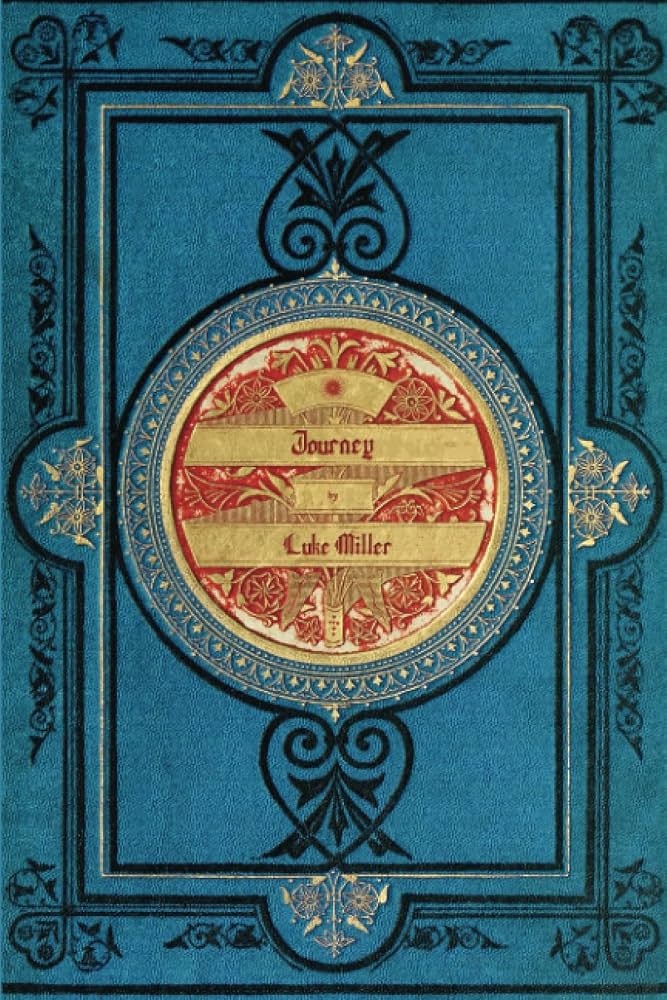
I googled things like “best journaling RPGs” and “which journaling RPG to start with”, and opened up three dozen tabs. I watched videos with advice, reviews and opinions. I fawned over the beautiful cover art. I hovered my cursor over the “buy” button on some gorgeous physical book editions. I learned about the different subtypes, the award-winning games that kicked off new rule sets, and the games everyone disagrees about. I determined the optimal list of games to start with, given my personal preferences and prior experience with RPGs.
Finally, at long last, I chose Borealis, a game with minimal rule complexity, and which promised a playtime of one to three hours. I bought the PDF.
And then I felt satisfied.
Second wind
Over a year later, I’m traveling away from home for a while. I found myself bored and decided to try that journaling RPG that I’d downloaded.
The only problem was I couldn’t remember what it was called or what folder I had put it in. I searched in my File Explorer. I searched in Dropbox. I searched my Gmail. I asked Claude if he had any idea what game I was talking about. Alas he did not.
Eventually I give up and do a second round of window shopping.
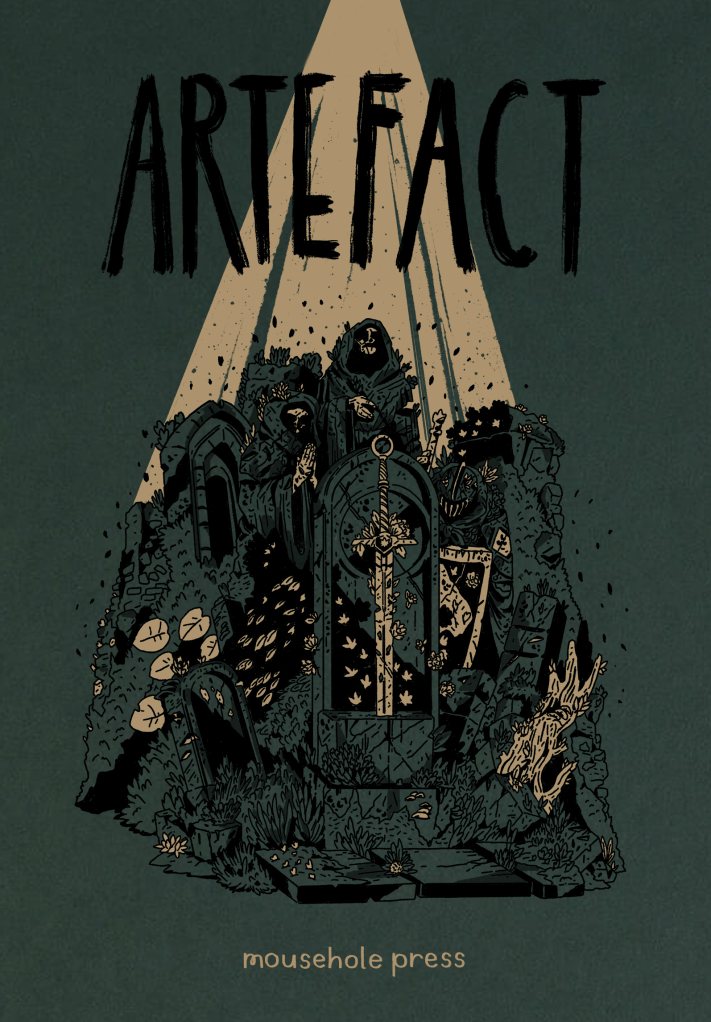
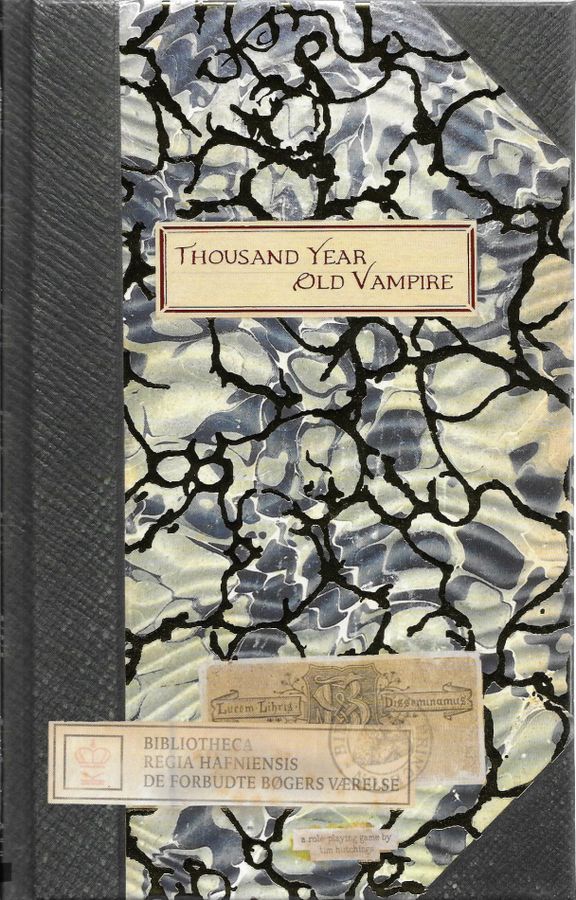
Amusingly it had been long enough that I had forgotten much of what I learned the first time, and this round of window shopping was just as fun. I even went to a brick-and-mortar game store (they only had one). Eventually I found two journaling RPGs that looked really pretty and had themes that appealed to me: Artefact and Tales from the Gods. But I didn’t start either one. They seemed like they would take a while or something. Instead I bought a hard copy of Tales from the Gods, and watched some more review videos.
Eventually, I realized I could search my email for the name of the stores that people use to sell their solo RPGs. Then I was able to find and re-download a copy of Borealis.
Freed from my indecision, I eagerly opened the PDF and began reading the rules. After reading the pretty introductory flavor text for the story, I got to the “Materials” section, which told me that I needed a deck of cards. Given that I was traveling, I did not have a deck of cards nor did I have particularly easy access to one. I kept reading through the setup and play rules, hoping that I could maybe just use paper or use some kind of online card deck simulator. But it quickly became clear that the cards were being used in a very physical way that would not be practical to simulate.
Or would it? For we now live in the great age of LLMs, and they are supremely good at coding.
Act II coming soon.

