
This is my post for day 28 of the Inkhaven writing retreat.
Learning a language is notoriously difficult. You have to learn a thousand things before you can hold even a basic conversation at the grocery store. The gap is huge.
It’s widely recognized that children have some kind of biological advantage in learning their first language (in addition to the fact that it’s mandatory and also they have all the time in the world). But you don’t stop learning your native language as a child. You constantly learn new slang, new fancy words, and different patterns become more clear to you over time. You might learn different registers like writing office emails, academic papers, or spending time in a new group of friends with a different culture. And as the decades start to pass, you can experience even the baseline rules of your native language shift. It’s easier to keep up with these, since you’re just shifting incrementally.
But… all language diversity occurred through incremental shifting over time. Just, a lot of time. So what if you could learn a language just by… learning those shifts backwards?
Start by watching old black & white movies. Right away you’ll see plenty of differences (and not just the transatlantic accent.) These probably already feel familiar to you.
Then start reading some older novels or newpaper articles. Give some Charles Dickens a try. Whenever you encounter something you don’t understand, look it up so that you’re maintaining intelligibility. As you go further back you’ll notice longer sentences. I think this was just a stylistic fad, and you can learn to parse them faster by decided that many of the commas and semicolons are basically periods, where you can give your mind a break. Eventually you can get back to writing like the Federalist papers or George Washington’s farewell address.
We might have been starting too slow. This was the easy part, and we have a long way to go. So make sure it’s not too long before you can easily read Shakespeare. There might be a lot to look up, but there are lots of resources. Once that’s easy, the Canterbury tales might be more approachable. You’ll often find these “translated” into modern English, but we obviously want the original.
This is about to get a lot harder, so let’s take a breath with a recreational read. The Wake by Paul Kingsnorth is a modern novel written in a made up dialect of English that is made to sound as much like old English as possible while still being readable to a modern speaker.
when i woc in the mergen all was blaec though the night had gan and all would be blaec after and for all time
It takes a bit to get the engine started, but I found it extremely satisfying when I got to the point where I didn’t notice it anymore. If you want even more fun you can join the Anglish-speaking community.
But after that, we gotta get serious and learn real Old English. Very recently a book has been released that is designed precisely to teach you Old English with a story that gets gradually more complex. It’s called Ōsweald Bera, and yes, it’s about a bear named Ōsweald.
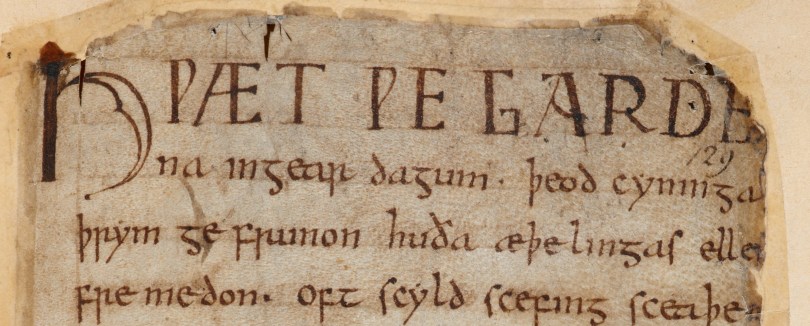
After that, you can read Beowulf. Just kidding, that would still be way too hard. But you’d be much closer. And, wait, weren’t we trying to get to some other language? Okay, so it would take quite a lot more steps to get down the ancestral tree of languages before you could then start tracing a branch back up to a currently-spoken language. And if you don’t want that language to be Frisian, you’ll need to go even further back. So maybe this scheme is as silly as we expected. But at least along the way you got a degree in the history of the English language.
 The Nameless Virtue