
This is my post for day 1 of the Inkhaven writing retreat.
History is often defined to have begun with writing. That is, something is considered history if we know about it because someone wrote it down. Otherwise, it is considered pre-history. We only know about pre-history by making inferences from physical evidence.
Before we go any further, the typical definition of a writing system is that it must be able to encode, physically and persistently, arbitrary speech from a language. Humans have been using physical markings and symbols to communicate specific concepts like “sun” or the names of kings for a much, much longer time than they have been using a full writing system.
The classic story is this;
The Sumerians invented writing first, around 3400 BCE, with cuneiform. The Egyptians followed suit shortly after, around 3100 BCE. It’s unclear to what degree the Egyptian invention of writing was caused by or influenced by cuneiform; they likely knew about it. Notably later, around 1200 BCE, the people of the Shang dynasty invented oracle bone script, which would evolve into modern Chinese. Mayan hieroglyphs extend back to 200 BCE, in a place so far away from Asia that its development is certainly independent.
So: four, maybe three, independent inventions of writing. I think this story is extremely cool and beautiful on its own. But the details of what we know and how we know it reveal a surprisingly rich space of other possible stories.
Disclaimer: I am not a professional in any related field and I find it surprisingly difficult to recover clear facts about these timelines from online research. Everything below represents my general impression more than any specific claims.
How old is it?
Archaeologists (and, to be fair, many scientists) seem to have a tendency to state that something is as old as the oldest existing positive example. This is understandable; there is a long history of people just claiming that stuff is really old, and getting fame and attention for that.
While archaeologists sometimes acknowledge that something could be older, they do not, as a field, seem to be attempting to collaboratively build a probabilistic model of how old things are, taking into account less crisp things like the existence of prerequisite conditions, or the occurrence of events which could have wiped out earlier evidence. Another way to say this is that they don’t seem to think in a very Bayesian way.
But sometimes, you pretty much just know how old something is, because you have records during its entire developmental process.
If you have lots of fossils of dinosaurs, and then lots of fossils of increasingly bird-like dinosaurs, and then lots of fossils of decreasingly dinosaur-like birds, and then lots of fossils of birds — you pretty much can just know how old birds are.
Similarly, we have found stone tools with a range of developmental sophistication going all the way from fancy obsidian daggers back to things that just barely look like deliberately broken rocks, with countless samples smoothing filling in the space.
With textiles however, they essentially all decay after a few thousand years at the absolute longest. So whether there was or was not 300,000 year old clothing, we would not find it.
Similarly, there seem to be tattoos on bodies as far back as the skin is still preserved.
For this reason, it seems to me like we can know exactly how old cuneiform is.
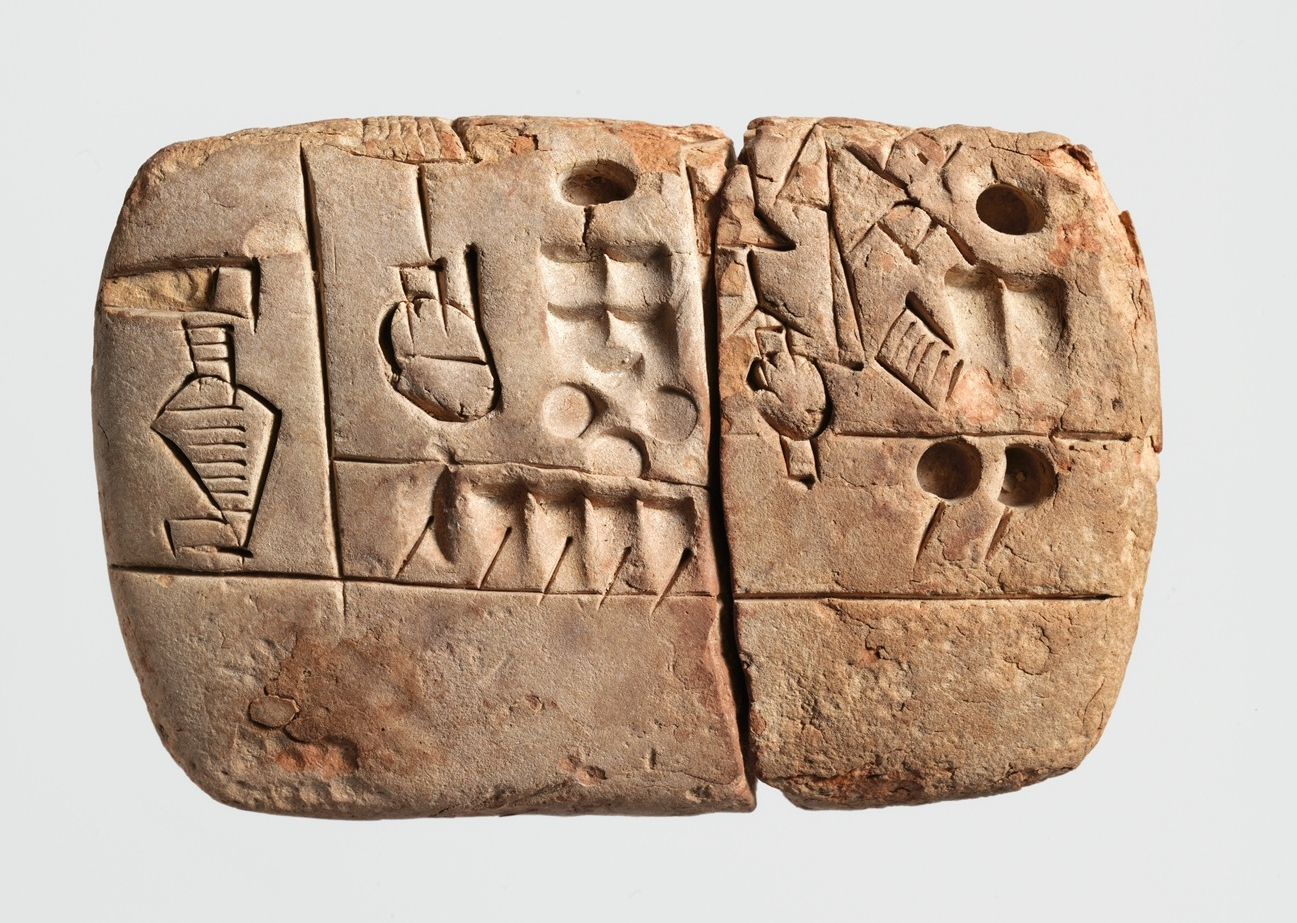
It all started in the 8th millennium BCE with clay balls called “bullae”, which were impressed with symbols that recorded goods exchanged. This evolved over time into simple seal impressions on flat tablets. The denoting of quantities and types of goods grew more complex over time. Pictographs began to be used for what they sounded like, and not just what they depicted. “Proto-cuneiform” is considered to have begun development around 3200 BCE, not reaching full writing system status until more like 2900 BCE. We have hundreds of tablets from this period,1 and a pretty good sense of how it developed.
Egyptian hieroglyphs seem to have a fuzzier record of their proto-writing period. Full writing emerges around 2800 BCE. There are some simpler uses of hieroglyphs dating back to the ink labels on jars from the tomb of King Ka from 3120 BCE, or the ivory tags from Abydos Tomb U-j from 3250 BCE. Given how close this is to the dates for cuneiform, I’m confused about why the consensus is confident that cuneiform was older.

In stronger contrast, oracle bone script, the ancient predecessor of Chinese, seems to have jumped into the historical record as a fully-formed writing system in 1200 BCE. I claim that this means that we have basically no idea how old Chinese writing is. The windfall of artifacts seems to be due to the rulers engaging in a particular practice of divination, leaving records of the query and answer on turtle shells and ox scapula, which are relatively durable. At roughly the same time,2 they started inscribing onto bronze vessels, which are extremely durable. If they were writing on paper, bamboo or silk before that, we wouldn’t see it. There are several artifacts which are thousands of years older than oracle bone script, claimed to be potential predecessors of it. But they are tauntingly sparse.

The history of Mayan seems far fuzzier still. It seems not to have originated with the Maya at all. Another script found nearby is Zapotec which, while obviously strongly related, is different enough that it is considered undeciphered. And there are a handful of much older artifacts that indicate that this family of scripts may have been developing as far back as the Olmec civilization. These artifacts seem to show symbols that are less likely to constitute a full writing system. But the intermediate record is so sparse that it’s hard to say much. All these artifacts are on stone; the most durable material, and also one of the most effortful to write on. We can be certain the writing was first developed on an easier medium.
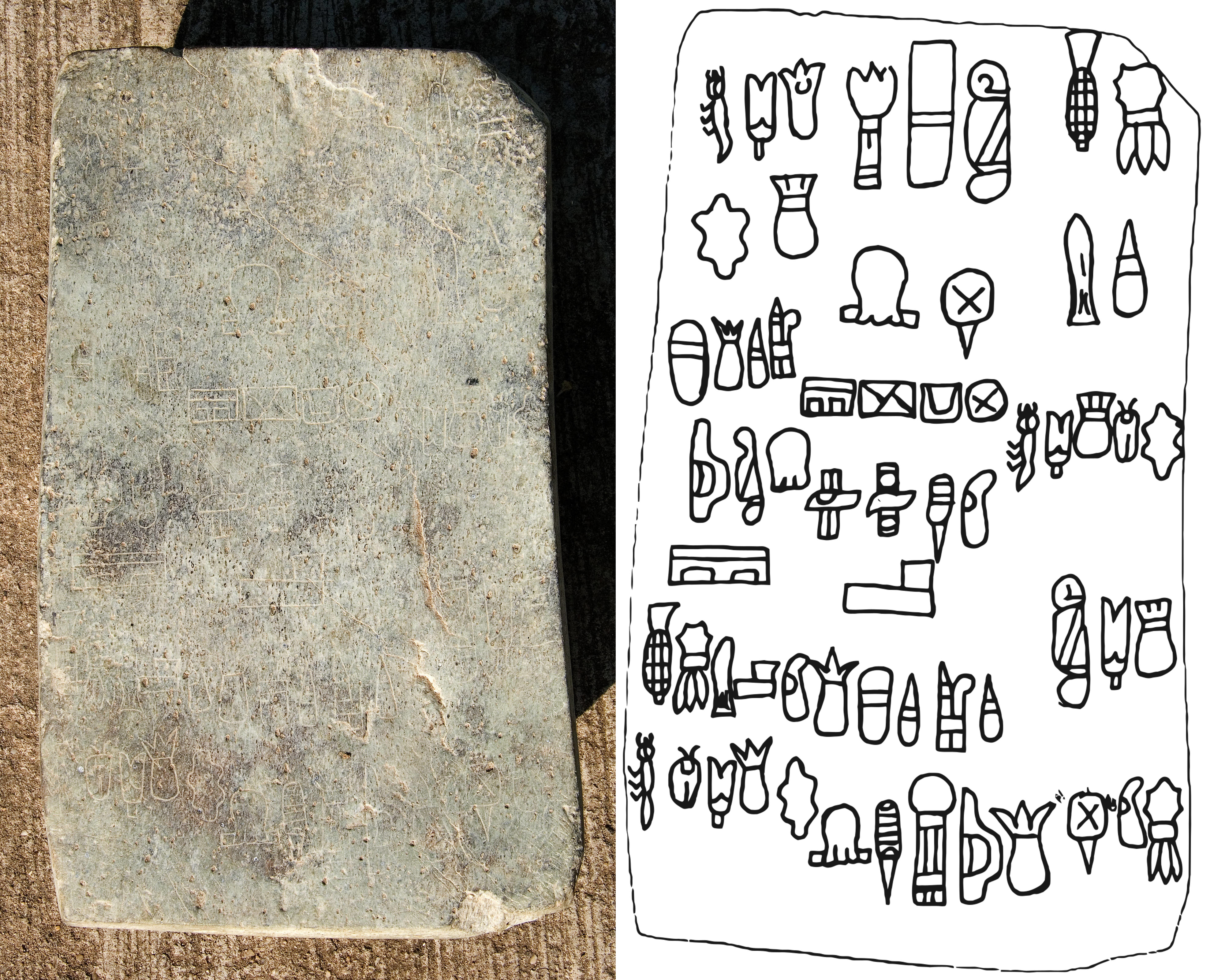
Beyond these four script families, there are many other artifacts across the world that may represent independent inventions of writing, like the knotted cords of the Inca, the rongorongo glyphs of Rapa Nui, a cuneiform competitor, or the mysterious symbols on many Vinča artifacts, these latter potentially dating from 5000-3500 BCE.
When I look at all these facts combined, they seem at least compatible with many different histories. The blank spots in the chronology seem to contain plenty of space for unseen structure.
What does it mean?
It’s hard to say why I find it so compelling to know exactly how the origin of writing went down. In some sense, writing feels like humanity fulfilling its potential. Information is incredibly powerful. It can etch the world onto a grain of sand. It’s like a wormhole that teleports the past into the future. There was a brief period of history where no one on earth could read any of these four scripts. But true language has structure that reflects the structure of the world. Now, they can all be read again, in the majority. Although I do not think writing does much to preserve individual human souls from ultimate annihilation, I think it goes a long way towards preserving humanity.
- If you were thinking you’d heard there were hundreds of thousands of cuneiform tablets, those ones are from after the proto-cuneiform period. ↩︎
- Since oracle bone script and the bronze scripts are attested from almost the same time, I am also confused about why oracle bone script is universally reported to be the “oldest” form of Chinese writing. EDIT: I go deeper on this question in a future Inkhaven post. ↩︎
 The Nameless Virtue